Draft Angle for Textured Surfaces by Finish
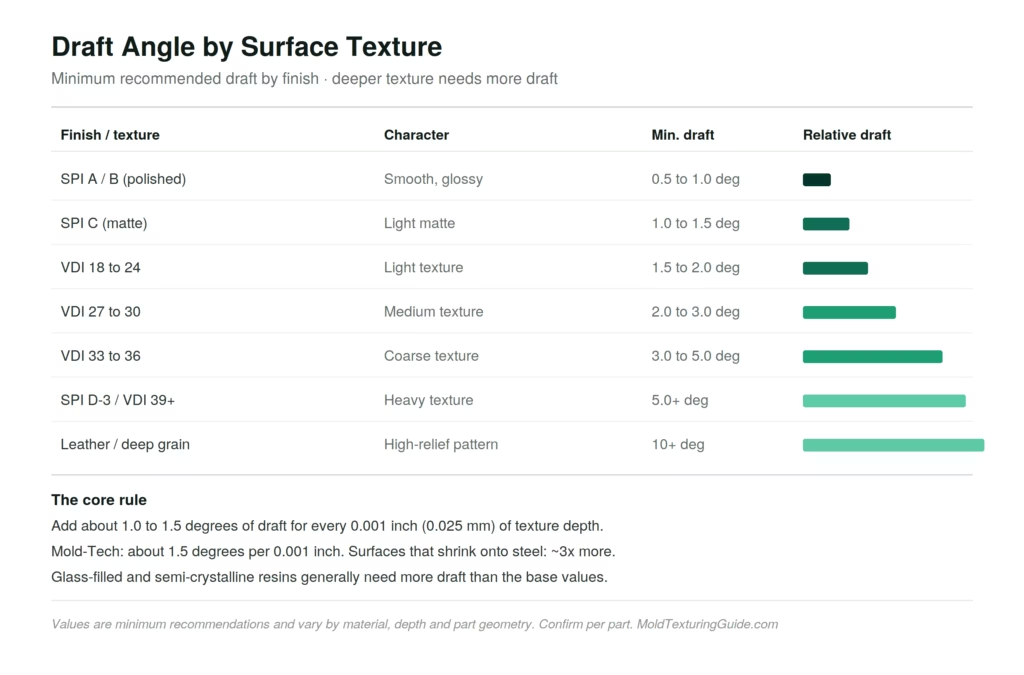
Draft angle is the taper added to the walls of a molded part so it can eject cleanly, and textured surfaces need more of it than smooth ones. The core rule is to add roughly 1.0 to 1.5 degrees of draft for every 0.001 inch (0.025 mm) of texture depth, on top of a base draft. Smooth SPI A or B surfaces may need only 0.5 to 1 degree, light VDI textures 1.5 to 2 degrees, and coarse textures 3 to 5 degrees or more, with deep leather grains sometimes requiring 10 degrees or beyond. This page explains why texture drives draft, gives recommended angles by finish, and covers the material and geometry factors that change them.
What is draft angle and why it matters
Draft angle is the slight taper applied to the vertical walls of an injection-molded part, measured in degrees from the direction the mold opens. Without it, a part tends to stick in the cavity and is difficult to eject without damage. Proper draft promotes clean ejection, reduces tooling wear, shortens cooling time, and lowers the rate of cosmetic defects. It is one of the most important design decisions for any molded part, and it becomes critical the moment a texture is added.
The reason is mechanical. A textured cavity is covered in tiny peaks and valleys. When that texture transfers to the part, the part and the mold effectively interlock along the wall. If the wall is vertical or nearly so, those features act like thousands of microscopic hooks that grab the plastic during ejection, producing drag marks, scuffing, or even deformation. Draft tilts the wall enough that the part lifts away from the texture instead of scraping across it.
Why texture demands more draft
The deeper and coarser the texture, the more draft the part needs. A polished surface has almost nothing to grip, so a minimal draft suffices. A deep grain has pronounced features and behaves like a field of small undercuts; the part must clear all of them at once during ejection, which only adequate draft allows. This is why a leather or snakeskin pattern can require far more draft than a smooth finish, sometimes 10 degrees or more, because the relief is deep and complex.
This relationship is direct enough to express as a rule of thumb, which is the heart of texture-aware design.
The core rule: draft per unit of texture depth
The widely used industry rule is to add about 1.0 to 1.5 degrees of draft for every 0.001 inch (0.025 mm) of texture depth, on top of the base draft the part already needs for its geometry. For Mold-Tech textures, which tend to have coarser features, the common recommendation is about 1.5 degrees per 0.001 inch of depth.
The rule scales naturally with the standards. A light texture adds a little; a deep texture adds a lot. The practical consequence is that texture is never a purely cosmetic choice: selecting a deeper grain commits the part to more draft, which changes the wall geometry and can affect fit, appearance, and tooling. That is why finish and draft should be decided together, early, not bolted on after the part is designed.
Recommended draft by finish and grade
The following are minimum recommendations, useful as a starting point. The actual requirement depends on texture depth, material, and part geometry, and should be confirmed for each part.
| Finish / texture | Character | Minimum draft |
|---|---|---|
| SPI A / B (polished) | Smooth, glossy | 0.5 to 1.0 degree |
| SPI C (matte) | Light matte | 1.0 to 1.5 degrees |
| VDI 18 to 24 | Light texture | 1.5 to 2.0 degrees |
| VDI 27 to 30 | Medium texture | 2.0 to 3.0 degrees |
| VDI 33 to 36 | Coarse texture | 3.0 to 5.0 degrees |
| SPI D-3 / VDI 39+ | Heavy texture | 5.0+ degrees |
| Leather / deep grain | High-relief pattern | 10+ degrees |
Minimum recommendations only; values vary by depth, material, and geometry.
The shrink-away versus shrink-on distinction
A factor that changes draft dramatically is whether the textured surface shrinks away from the steel or onto it. As a part cools, it shrinks. On surfaces where it shrinks away from the cavity wall, natural clearance forms and the standard draft rule applies. On surfaces where it shrinks onto a core, the part clamps down on the textured steel and grips it; these surfaces typically need roughly three times the draft of a shrink-away surface to release without dragging.
This single distinction explains many texturing failures. A draft that is perfectly adequate on an outer, shrink-away wall can be far too little on an inner, shrink-on wall of the same part. Lifters, slides, and other moving components add their own considerations, since their draft must be judged relative to their direction of action rather than the main parting line. The detail is covered further in the Mold-Tech textures reference.
How material changes the draft requirement
The polymer matters as much as the texture. Semi-crystalline polymers such as PP, PE, and POM shrink more than amorphous polymers, so they grip a textured core harder and generally need more draft. Amorphous polymers such as PC and ABS shrink less and are somewhat more forgiving, though deep textures still demand generous draft. Glass-filled and reinforced grades are more abrasive and less compliant on ejection, so they also push the draft requirement upward.
Research on textured molding has confirmed that material type and draft angle interact: the same texture on different resins reproduces with different clarity and tolerates different minimum drafts. The practical rule is to set draft for the specific resin and texture combination, not for texture in the abstract, and to add margin for filled or high-shrink materials.
Part geometry and draw depth
Draft interacts with how deep the wall is in the direction the mold opens, the draw depth. The deeper the draw, the more the taper accumulates into a real dimensional difference between the top and bottom of the wall. A large draft on a deep wall can change the part's fit and appearance noticeably, so designers sometimes face a trade-off between the draft a texture wants and the dimensions the part allows.
When geometry cannot accommodate the draft a deep texture requires, there are options: reduce the texture depth, choose a finer grade, remove texture from the most constrained deep-draw features, or change the texturing method. The decision belongs in the design phase, because by the time the steel is cut, changing it is expensive.
Practical guidance
A workable approach is to start from the base draft the geometry needs, then add the texture allowance using the depth rule, then increase it for shrink-on surfaces and for high-shrink or filled materials, and finally validate against the part's dimensional limits and, where possible, an ejection simulation or a physical trial. Specifying the finish and the matching draft together, early, prevents the most common and most costly texturing mistake: a beautiful deep texture on a wall that cannot release it cleanly.
How this connects to the standards
Draft is the engineering bridge across the three mold texture standards. Whether a finish is written as an SPI grade, a VDI 3400 number, or a Mold-Tech pattern, the same physics governs ejection: deeper texture, more draft. The standards describe the surface; draft makes it manufacturable. For the overview of how the standards relate, see the mold texture standards hub, and for definitions see the glossary.
Frequently asked questions
What is draft angle in injection molding?
The slight taper applied to the vertical walls of a molded part, measured in degrees, that lets it eject from the mold without sticking or dragging.
How much draft does a textured surface need?
Add about 1.0 to 1.5 degrees per 0.001 inch (0.025 mm) of texture depth, on top of the base draft. Mold-Tech textures often use about 1.5 degrees per 0.001 inch.
What draft does a VDI 33 finish need?
A coarse grade like VDI 33 often needs a total draft in the range of 3 to 5 degrees, depending on depth, material, and geometry.
Why do textured surfaces need more draft than smooth ones?
Texture adds microscopic peaks that interlock with the part like tiny hooks. Without enough draft, they grab the plastic during ejection and cause drag marks or scuffing.
What is the difference between shrink-away and shrink-on draft?
Shrink-away surfaces pull away from the steel and follow the standard rule; shrink-on surfaces grip the core and need roughly three times more draft.
Does the plastic material affect draft?
Yes. Semi-crystalline and glass-filled resins shrink more or grip harder and generally need more draft than amorphous, unfilled grades.
What if my part cannot fit the required draft?
Reduce the texture depth, choose a finer grade, remove texture from deep-draw features, or change the texturing method, decided in the design phase.
How much draft does a leather-grain texture need?
Deep leather or snakeskin grains can require 10 degrees or more, because the relief is deep and acts as a series of undercuts.
Normative References & Sources
- ISO 1302 — Surface texture indication: iso.org
- Standex Engraving Mold-Tech — texture depth and draft guidance: standex.com
- Draft angle and texture-depth design references (values approximate; confirm per part).
Reviewed by Marcel Dias — Technical Editor. Draft values are minimum recommendations and are approximate; verify against the texture depth, material, part geometry, and a physical trial before production. See our Disclaimer.
Leave a Reply